
Glass furnaces are the core equipment in glass production, operating continuously at temperatures above 1500℃. They are the main energy-consuming equipment in glass production lines, accounting for over 70% of total energy consumption. Furnace insulation is a primary measure for energy conservation and consumption reduction, and the selection and performance of insulation materials affect the insulation effect and furnace lifespan. The corrosive effects of molten glass, high-temperature flue gas, and significant temperature fluctuations place extremely high demands on the performance of insulation refractory materials. These materials not only need excellent thermal insulation properties to reduce energy consumption but also good erosion resistance, thermal stability, and mechanical strength to extend furnace lifespan and ensure production stability. The following is a detailed explanation of commonly used fully insulating refractory materials for glass furnaces, their characteristics, and application scenarios.
I. Aluminosilicate Insulating Refractory Materials
Aluminosilicate insulating refractory materials are among the most widely used insulation materials in glass kilns. They are primarily composed of alumina and silica, and can be classified into three categories based on purity and additives: ordinary aluminosilicate fiber, high-purity aluminosilicate fiber, and zirconium-containing aluminosilicate fiber.
* Ordinary aluminosilicate fiber: Alumina content is approximately 45%-55%, silica content is approximately 40%-50%, and the maximum long-term service temperature can reach 1260℃. This material has low thermal conductivity, good flexibility, and thermal shock resistance. It is easy to install and can be made into various forms such as fiber blankets, fiber modules, and fiber boards. It is mainly used in the furnace roof, side wall linings, and outer layers of flue gas ducts in medium- and low-temperature areas of glass kilns, providing initial thermal insulation.
• High-purity aluminosilicate fiber: Alumina content increased to 60%-70%, silica content approximately 30%-35%, with a maximum long-term operating temperature of up to 1400℃. Its thermal stability and corrosion resistance are superior to ordinary aluminosilicate fiber, enabling it to withstand higher temperature fluctuations. It is commonly used in areas with high temperatures and strong flue gas corrosion, such as the upper part of the regenerator chamber and the upper part of the sidewall of the melting pool in glass furnaces, effectively reducing heat loss.
• Zirconium-containing aluminosilicate fiber: With the addition of 10%-20% zirconium oxide, it can reach temperatures up to 1600℃, making it the aluminosilicate material with the best high-temperature resistance. This material combines excellent resistance to molten glass corrosion and thermal shock stability, allowing direct contact with the core areas of high-temperature molten glass and highly corrosive fumes. It significantly reduces heat loss from the furnace and extends the service life of the insulation layer.
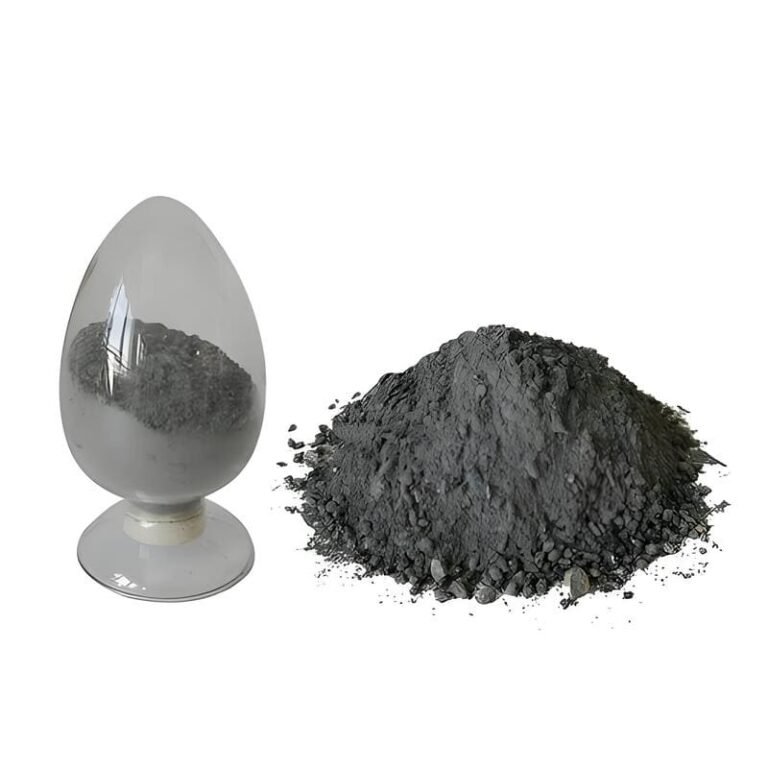
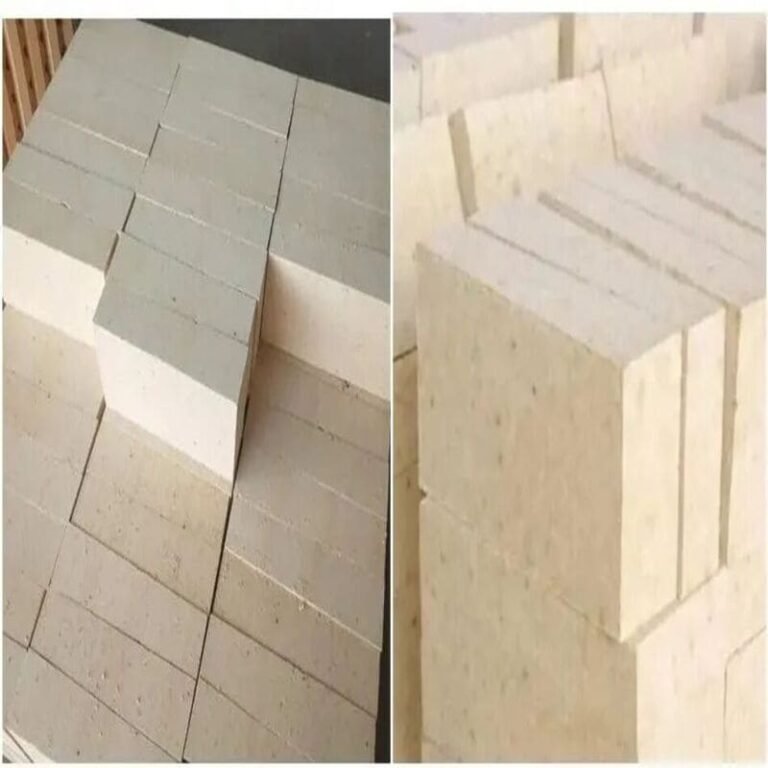
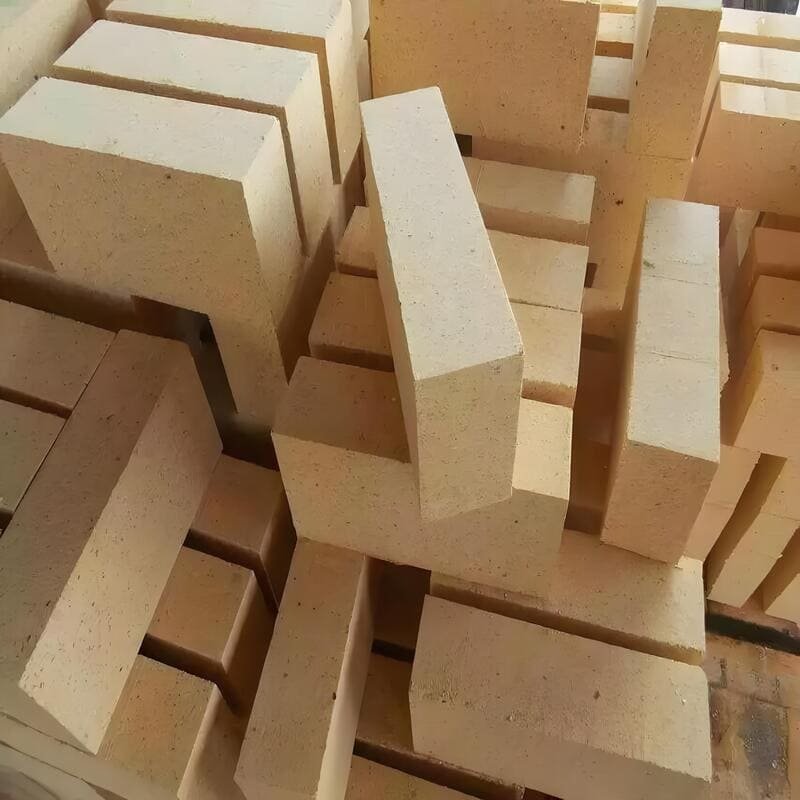
II. Lightweight High-Alumina Thermal Insulation and Refractory Materials Lightweight high-alumina thermal insulation and refractory materials typically contain more than 48% alumina. They are prepared by adding foaming agents or using foaming or hollow sphere methods, forming a large number of closed or semi-closed pore structures inside, thus possessing both high fire resistance and good thermal insulation performance.
This material has a maximum long-term service temperature of up to 1450℃. Compared to lightweight clay refractory insulation materials, it exhibits superior thermal shock resistance, mechanical strength, and corrosion resistance, enabling it to withstand dramatic temperature changes and certain mechanical loads within glass furnaces. It is primarily used in high-temperature areas requiring structural strength, such as regenerators, flues, melting pools, or the lower part of pool walls in glass furnaces. It can be used directly as an inner lining or combined with heavy refractory bricks to form a composite insulation structure, enhancing overall thermal insulation performance.
III. Lightweight Clay Insulating Refractory Materials
Lightweight clay insulating refractory materials use soft clay as the main raw material, with an alumina content of approximately 30%-48%. They are produced using the burnout additive method or the foaming method, and their internal porosity can reach 60%-80%. Their maximum long-term service temperature is approximately 1200℃-1300℃. They have low thermal conductivity and relatively low cost, but their mechanical strength and thermal shock resistance are weak, making them unsuitable for areas with drastic temperature fluctuations or heavy mechanical loads.
In glass kilns, lightweight clay insulation and refractory materials are mainly used for the outer layer of insulation in the low-temperature section, such as the outer side of the kiln foundation and the outer layer of the flue gas outlet pipe. They can achieve effective heat insulation at a low cost. When used in conjunction with the high-grade insulation materials in the inner layer, they form a gradient insulation structure, balancing the insulation effect and the cost.
IV. Microporous Calcium Silicate Insulation Material
Microporous calcium silicate insulation material is primarily composed of calcium silicate gel, containing numerous micropores with sizes ranging from 1μm to 10μm. With a density of only 200kg/m³ to 400kg/m³, it is an ultra-lightweight insulation material. Its thermal conductivity is extremely low, only around 0.04W/m·K at room temperature, and its maximum operating temperature is approximately 650℃-900℃.
Due to its limited high-temperature resistance, this material is mainly used in the outer insulation structure of glass furnaces, such as the outermost layer of the furnace sidewalls and the outer bottom of the regenerator in low-temperature areas. This significantly improves overall insulation efficiency without increasing the load excessively, reducing heat exchange between the environment and the furnace, and lowering energy consumption during production. Furthermore, microporous calcium silicate material also possesses good waterproof and frost-resistant properties, making it suitable for insulation of outdoor glass furnace equipment.
V. Silica Insulation Board
Silica insulation board is made primarily from natural quartz sand through a high-temperature melting, foaming, and cooling molding process. Its main component is silicon dioxide (content >96%), with a uniform closed-cell structure. It can withstand long-term use temperatures up to 1000℃.
Silica insulation board possesses excellent thermal insulation properties, chemical stability, and thermal shock resistance, and has extremely low linear shrinkage, making it resistant to deformation under high temperatures. In glass furnaces, it is mainly used on the outer walls of the furnace tank and around small furnace openings. It fits tightly against the furnace structure, effectively preventing heat loss from the tank walls and avoiding cracking and detachment of the insulation layer due to temperature fluctuations, thus ensuring the long-term stable operation of the furnace.
VI. New Composite Thermal Insulation and Refractory Materials
With the upgrading of glass production processes and the increasing demands for energy conservation, new composite thermal insulation and refractory materials are gradually being applied in glass furnaces. These materials are typically composed of two or more insulation materials with different properties, combining the advantages of each component:
* **Ceramic Fiber Composite Insulation Board:** This board combines aluminosilicate fibers with lightweight high-alumina refractory aggregates, possessing both the flexibility of fiber materials and the high strength of aggregates. Its maximum service temperature can reach 1500℃. This material can be directly used as a furnace lining, suitable for areas such as the side walls of the melting pool and the furnace roof. No additional anchoring structures are required during construction, simplifying the installation process.
* **Aerogel Composite Insulation Material:** This material uses aerogel as the core insulation layer, wrapped with aluminosilicate fiber felt or high-alumina refractory paper on the outside. Its maximum service temperature can reach 1200℃. Its thermal conductivity is much lower than traditional insulation materials, achieving better insulation performance at the same thickness. It is mainly used for insulation of high-temperature pipes and valves in glass furnaces, significantly reducing residual heat loss.
VII. Selection Principles of Insulation Refractory Materials for Glass Furnaces
When selecting full-insulation refractory materials for glass furnaces, the following factors must be considered comprehensively:
• Operating Temperature Matching: Based on the actual operating temperature of different areas of the furnace, select materials whose maximum operating temperature is not lower than that temperature to avoid material melting, shrinkage, or detachment due to high temperatures. For example, the furnace top area of the melting pool requires zirconium-containing aluminosilicate fiber or lightweight high-alumina materials, while microporous calcium silicate materials can be used for the outer insulation layer.
• Chemical Erosion Resistance: Glass furnaces contain corrosive media such as molten glass vapor and alkaline fumes. Materials with strong corrosion resistance must be selected according to the degree of erosion. For example, zirconium-containing aluminosilicate fiber can effectively resist the erosion of molten glass vapor and is suitable for areas such as the feeding port.
• Mechanical Strength Requirements: For areas with mechanical loads or vibrations, such as the regenerator grid, lightweight high-alumina materials with high mechanical strength must be selected to prevent the insulation material from breaking and collapsing during operation.
• Ease of Construction and Maintenance: Prioritize materials with low construction difficulty and simple post-construction maintenance, such as aluminum silicate fiber modules that can be directly assembled, reducing on-site construction time. Simultaneously, consider the ease of material cutting and repair to lower maintenance costs.
• Cost and Economy: While meeting performance requirements, balance material costs with long-term energy-saving benefits. Employ a gradient insulation structure, using high-grade materials in high-temperature areas and low-cost materials in low-temperature areas to achieve optimal overall cost-effectiveness.
VIII. Development Trends of Fully Insulated Refractory Materials for Glass Furnaces
In the future, fully insulated refractory materials for glass furnaces will develop in the following directions:
* **Ultra-high Temperature Application:** Developing insulation materials with a maximum service temperature exceeding 1700℃ to meet the needs of new glass furnaces (such as ultra-high temperature melting furnaces for special glass), further improving the furnace’s thermal efficiency.
* **Environmentally Friendly Application:** Reducing harmful substances in materials (such as chromium and asbestos), promoting chromium-free and asbestos-free green insulation materials, and reducing environmental pollution during production and use.
* **Composite and Functional Application:** Developing composite insulation materials with multiple functions such as heat insulation, corrosion resistance, thermal shock resistance, and self-healing, simplifying the furnace insulation structure, and improving overall performance.