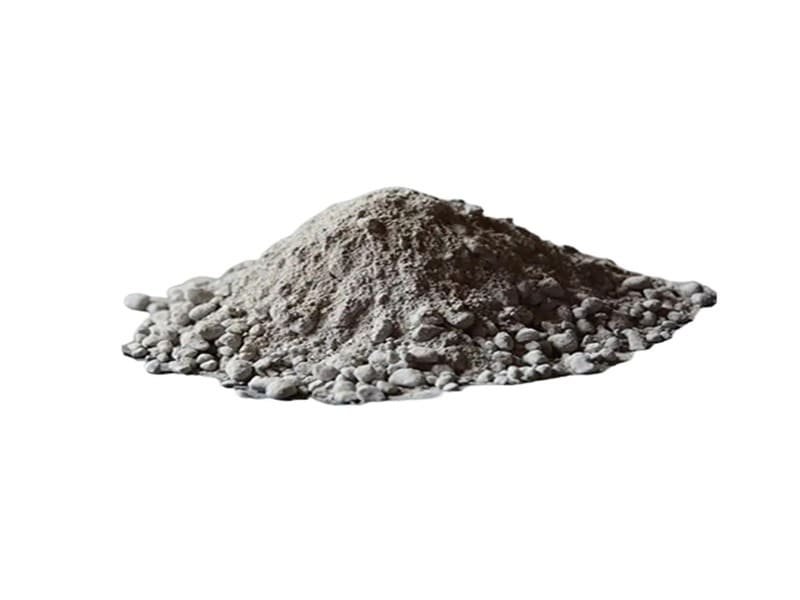
Calcium Aluminate Cement (CAC), commonly referred to as Refractory Cement, is a specialized hydraulic binder primarily composed of calcium aluminates. Unlike Ordinary Portland Cement (OPC), its high alumina content makes it exceptionally suitable for high-temperature applications.
Key Characteristics:
High Refractoriness: CAC exhibits excellent heat resistance, with a refractoriness typically exceeding 1400°C (2550°F) . Specific grades (such as CA-70 or CA-80) can withstand temperatures beyond 1650°C (3000°F) , making it ideal for the construction of industrial furnaces, kilns, and incinerators.
Rapid Strength Development: It achieves high mechanical strength very quickly. It can reach significant early-age strength within 6 to 24 hours, which is crucial for reducing installation downtime.
Chemical Resistance: It offers good resistance to a wide range of chemically aggressive conditions and weakly acidic environments.
Abrasion and Thermal Shock Resistance: When used in castables, it provides excellent resistance to mechanical wear and thermal cycling (thermal shock), ensuring the durability of linings subjected to rapid temperature fluctuations.
Chemical & Physical Parameters:
The performance of refractory cement is defined by its purity and physical properties. The primary chemical indicator is the Al₂O₃ (Alumina) content:
Standard Grade (CA-50): Al₂O₃ content ≥ 50%, suitable for general refractory applications up to 1400°C.
Intermediate Grade (CA-60/70): Al₂O3 content between 60-70%, offering improved performance.
High Purity Grade (CA-80): Al₂O₃ content ≥ 77-80%, designed for severe environments with temperatures exceeding 1600°C.
Key physical specifications include specific surface area (fineness), setting time (initial set >30 minutes), and compressive/flexural strength.
Primary Applications:
Refractory cement is rarely used alone; it functions as a binding agent in monolithic refractories.
Iron & Steel Industry: Lining for ladles, tundishes, and reheating furnaces.
Cement Industry: Linings for rotary kilns and preheaters.
Glass Industry: Forehearths and regenerators.
Petrochemical Industry: Linings for fluid catalytic cracking units.
Waste Incineration & Foundries: High-temperature linings and burner blocks.
Selection Criteria:
Choosing the correct refractory cement depends on the specific operating temperature, the chemical environment of the process, and the installation method (casting, gunning, or ramming). The final refractory concrete is created by mixing the CAC with appropriately graded refractory aggregates (like chamotte, bauxite, or corundum) and admixtures.