
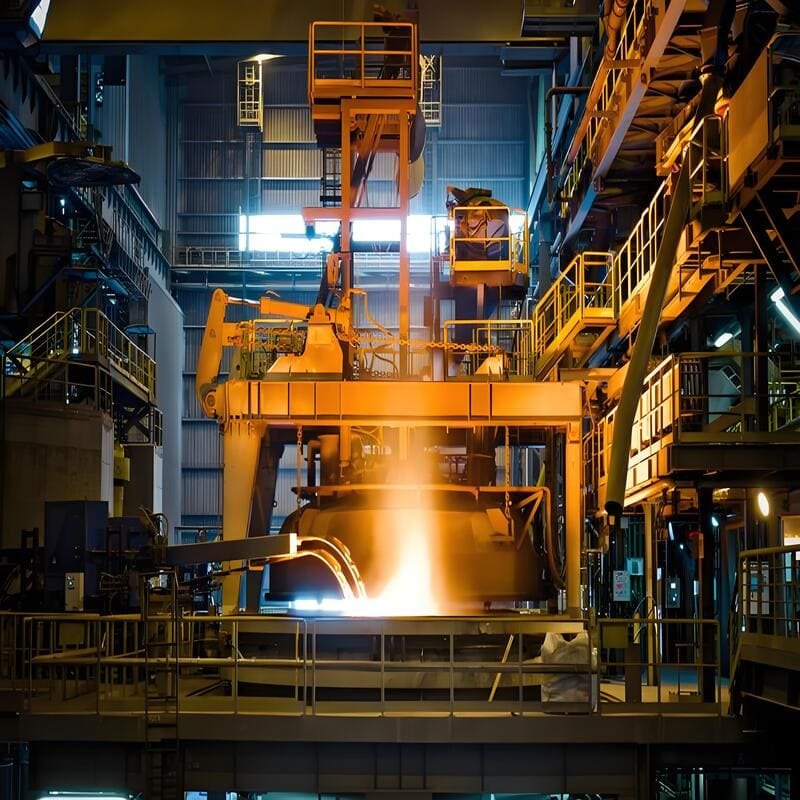
As a key piece of equipment in glass production, the selection of refractory materials for the arch of a float glass furnace is of paramount importance. These refractory materials must withstand various complex conditions, including high temperatures, chemical corrosion, and mechanical stress, and directly affect the furnace’s service life and the quality of the glass products. Therefore, a thorough analysis of the selection of arch refractory materials and their impact on quality is of great significance for optimizing float glass production processes and improving production efficiency.
I. Working Environment of the Float Glass Furnace Arch
1. High-Temperature Environment: During the production process, the arch of a float glass furnace is constantly exposed to a high-temperature environment of 1550℃ – 1630℃. Such high operating temperatures require refractory materials to possess excellent high-temperature resistance; otherwise, softening, deformation, or even melting may occur, affecting the structural stability of the furnace.
2. Chemical Erosion: The molten glass, volatiles, and combustion products within the furnace contain various chemical components, such as alkali metal oxides (Na₂O, K₂O, etc.) and sulfur oxides (SO₂, SO₃, etc.). These chemicals react with the arch refractory material at high temperatures, damaging its structure and reducing its service life.
3. Mechanical Stress: During the heating and cooling processes of the kiln, the difference in thermal expansion coefficients between the refractory material and the kiln’s steel structure generates thermal stress. Simultaneously, during glass production, airflow and material impact within the kiln also exert mechanical stress on the arch refractory material. Prolonged exposure to this complex stress environment can easily lead to cracking, spalling, and other damage to the refractory material.
II. Selection Principles for Arch Refractories
1. High-Temperature Resistance: The refractoriness should be higher than the actual operating temperature of the kiln, generally requiring a refractoriness of over 1700℃ to ensure no softening or deformation at high temperatures. For example, high-alumina refractories, due to their high alumina content, possess excellent high-temperature resistance and can be considered as candidates for arch refractories.
2. Chemical Resistance: The selected refractory material should be able to resist chemical erosion from molten glass, volatiles, and combustion products. For example, silicate refractories have good resistance to alkali metal oxide erosion and are advantageous in the selection of arch refractories for float glass kilns with high alkali content.
3. Thermal Stability: It should possess good thermal shock resistance, able to withstand a wide range of heating and cooling processes in the kiln without cracking or spalling. For example, magnesia-chromium refractories have high thermal conductivity and a low coefficient of thermal expansion, exhibiting excellent thermal stability.
4. Mechanical Strength: It should possess sufficient compressive and flexural strength to withstand the mechanical stresses inside the kiln. Typically, a compressive strength of 30 MPa or higher and a flexural strength of 5 MPa or higher are required at room temperature.
III. Selection and Quality Impact of Common Arch Refractories
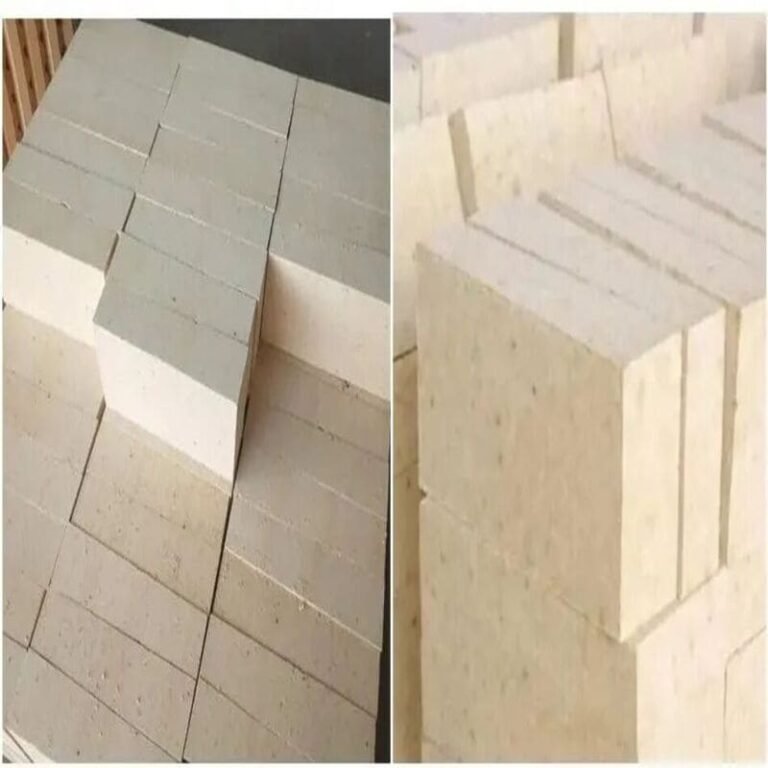
1. Silica Bricks: Characteristics: Silica bricks are mainly composed of SiO₂, with high refractoriness, generally between 1710℃ and 1730℃. Their load softening temperature is also high, close to their refractoriness. Simultaneously, silica bricks have good resistance to acidic media and are commonly used as arch refractories in the melting section of float glass furnaces. Impact on Quality: Advantages include good high-temperature volume stability, maintaining the shape of the furnace arch, which is beneficial for high-temperature heating of the molten glass, thus ensuring the uniformity of glass product quality. However, silica bricks have poor thermal shock stability and are prone to cracking under frequent temperature fluctuations in the furnace. Once cracks propagate, they may cause localized damage to the arch, affecting the overall structural safety of the furnace. Furthermore, silica bricks have relatively weak resistance to alkaline atmospheres. Under long-term operating temperatures, silica arches are prone to developing “rat holes,” and the surface erosion by alkaline atmospheres can lead to silica “droplet” defects.
2. High-alumina bricks: High-alumina bricks are primarily composed of alumina and are classified into different grades based on their alumina content. They possess high refractoriness (generally 1770℃ – 1920℃), good thermal shock resistance, and good mechanical strength. They are suitable for applications requiring high temperatures and a certain level of corrosion resistance, commonly found in small-scale special glass furnaces with strong alkaline or acidic atmospheres. Impact on quality: The excellent high-temperature resistance and corrosion resistance of high-alumina bricks ensure the stability of the furnace roof during long-term high-temperature operation, providing a stable heating space for the molten glass. Their good mechanical strength effectively resists mechanical stress within the furnace, reducing temperature fluctuations and quality instability in the molten glass caused by roof damage. However, if the alumina content is improperly selected or the production process is flawed, high-alumina bricks may react with certain components in the molten glass at high temperatures, affecting the stability of the molten glass composition and thus adversely impacting the quality of the glass products, such as leading to a decrease in the optical properties of the glass.
3. Zirconia-Alumina Brick Selection Characteristics: Zirconia-alumina bricks possess high refractoriness (between 1770-2000℃) and erosion resistance, but their thermal shock stability is relatively weak. In the non-phase transformation range (e.g., from room temperature to 900℃ or above 1150℃), the linear expansion rate of 33# zirconia-alumina bricks shows a normal increasing trend with increasing temperature, and the overall expansion behavior is affected by the ZrO₂ content. The ZrO₂ content in 33# zirconia-alumina bricks is approximately 33%, and its linear expansion rate is lower than that of high-zirconia bricks (e.g., 41%), but higher than that of traditional refractory materials such as clay bricks and high-alumina bricks. When using zirconia-alumina bricks in the kiln body, good temperature control is required. In float glass kilns, zirconia-alumina bricks are often used in areas subjected to high temperatures and severe chemical erosion, such as the arch of the kiln’s hot spots. Some all-oxygen kilns use zirconia-alumina bricks exclusively to resist the acidic atmosphere within the kiln.Impact on Quality: Zirconium-alumina bricks have relatively weak thermal shock resistance, requiring precise temperature control within a very narrow range to ensure stable furnace operation, prevent damage to the arch structure, and maintain the continuity of glass production. Their corrosion resistance effectively resists the erosion of molten glass and combustion products, extending furnace lifespan and reducing production interruptions caused by arch replacement. However, the silica component of zirconium-alumina bricks can react with alkaline gases in the atmosphere at high temperatures, causing quality problems and consequently affecting the quality of the glass products.
IV. Summary The selection of refractory materials for the arch of float glass kilns is a process that comprehensively considers multiple factors. Different types of refractory materials have their own advantages and disadvantages in terms of high-temperature resistance, chemical resistance, thermal stability, and mechanical strength, and their impact on glass product quality varies. In actual selection, a comprehensive balance must be struck based on factors such as the specific operating conditions of the kiln, the quality requirements of the glass products, and production costs to choose the most suitable refractory material, ensuring the long-term stable operation of the kiln and the high-quality production of glass products. Furthermore, with the continuous development of glass production technology, the performance requirements for arch refractory materials will continue to increase. In the future, it will be necessary to further research and apply refractory materials with superior performance to meet the development needs of the float glass industry.