
Refractory materials are widely used in steelmaking, ironmaking, building materials, steel rolling, and other industrial systems.
01. Steelmaking System
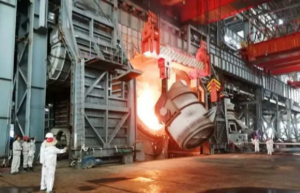
The steelmaking system comprises equipment such as converters, electric arc furnaces, ladle refining furnaces, steel ladles, and tundishes.
In electric arc furnaces, dry vibratable refractories, as well as precast or cast-in-place furnace roofs (or roof delta sections), have demonstrated excellent performance in service.
In both converters and electric arc furnaces, refractory spray materials are typically employed for repairs when damage occurs; repair methods include manual patching, wet spraying, dry spraying, flame spraying, and slag splashing for furnace protection.
In converters, the slag splashing technique for furnace protection is widely adopted, enabling the furnace lining to achieve a service life exceeding 10,000 heats.
There is a wide variety of ladle refining furnaces; specifically, the immersion tubes for RH and DH vacuum degassing units are typically cast as monolithic structures using high-alumina refractory castables, achieving a service life of 20 to 80 heats.
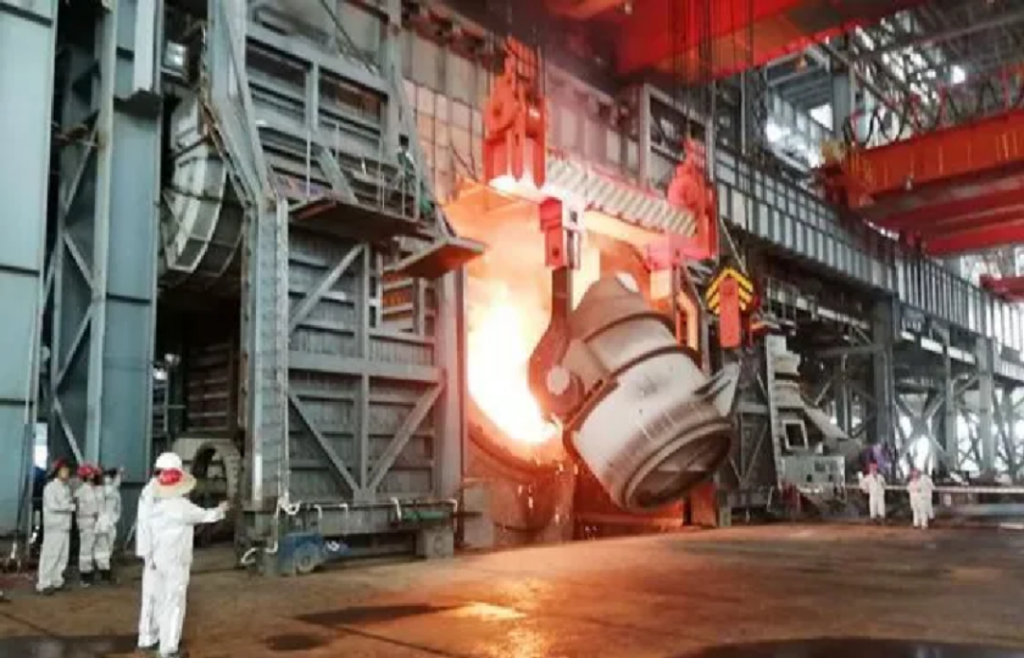
Steel ladles and tundishes are critical auxiliary components of steelmaking furnaces, and they represent the thermal equipment with the highest consumption of refractory materials. Historically, steel ladles were typically lined using fired bricks—such as clay, high-alumina, semi-silica, and pyrophyllite bricks—yielding a service life of 10 to 70 heats. However, when ladle refining or continuous casting processes are employed, factors such as elevated tapping temperatures and extended holding times cause the ladle lining life to decline sharply. Consequently, steelmaking nations worldwide have placed great emphasis on the development of advanced ladle lining materials, achieving significant progress in this field.
At a specific steelworks, 200-ton ladles used in converters were lined using aluminum-magnesia castables and self-flowing castables, achieving ladle lining lives of approximately 95 and 80 heats, respectively.
At another steelworks, 300-ton ladles used in converters were lined with high-purity aluminum-magnesia castables; following periodic repairs, the ladle lining life typically reached around 260 heats, with a specific refractory consumption rate of less than 1.78 kg per ton of steel.
Across China, numerous steelworks utilizing ladles with capacities of 100 tons or less have adopted new-generation aluminum-magnesia refractory castables; these linings achieve a service life of approximately 90 heats, with a casting cost ranging from 5.50 to 7.50 RMB per ton of steel. The lining of the tundish features insulating boards or magnesia-based coatings, while the slag dams are fabricated using mullite, alumina-magnesia, and magnesia refractory castables, thereby meeting the technical requirements for continuous steel casting.
The integral lance for secondary refining is utilized for applications such as ladle slag blowing or powder injection. The section above the slag line is constructed using high-alumina refractory castable, while the section extending from the slag line to the nozzle is formed from low-cement corundum refractory castable; the entire assembly is vibration-molded to create a monolithic lining.
02. Ironmaking System
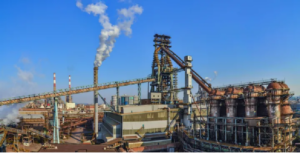
The ironmaking system comprises sintering, coking, and blast furnaces, along with their auxiliary equipment. The ignition furnaces for belt-type sintering machines are constructed on-site using plastic refractories and clay-bonded refractory castables, or by hoisting and installing prefabricated blocks made of phosphate-bonded refractory castables; their service life typically ranges from 3 to 6 years.
When a linear ignition device is employed, the thermal load on the furnace roof is significantly reduced, and the working conditions within the furnace chamber improve. In such cases, lightweight, high-strength refractory castables—or refractory fibers and their derivative products—can be utilized for the lining, yielding excellent results.
Refractory castables are used to form the insulation layers, facing layers, and furnace doors of coke ovens; when the furnace ends sustain damage, they are repaired using refractory gunning materials. Additionally, heavy-duty or lightweight refractory castables are utilized in dry coke quenching equipment.
The blast furnace is a continuous-production facility for ironmaking. While small-scale blast furnaces were historically constructed using prefabricated blocks made of aluminate-cement-bonded or phosphate-bonded high-alumina refractory castables, they are now predominantly constructed using resin-bonded alumina-carbon non-fired bricks.
For large-scale blast furnaces, silicon carbide castables are rammed into place to form the water-cooled walls; refractory castables and silicon nitride-based fillers are used for the hearth pad and the joints between surrounding bricks. When the furnace lining sustains damage, it is repaired using refractory ramming mixes and gunning materials to extend its service life, enabling the furnace campaign to reach 10 or even 15 years.
The taphole of a blast furnace is typically plugged using a loose-form Al2O3-SiC-C taphole clay, which ensures a stable flow of molten iron and facilitates normal operational procedures.
Blast furnace tapholes were historically constructed using rammed refractory mixes, with a specific consumption rate of approximately 1.1 kg of refractory material per ton of molten iron. Currently, dense, low-porosity refractory castables are employed; a single lining can handle a throughput of approximately 100,000 tons of molten iron, while the cumulative throughput over an entire campaign (lining lifetime) reaches approximately 900,000 tons, reducing the specific refractory consumption rate to less than 0.38 kg per ton of iron. Furthermore, self-flowing refractory castables and non-baking refractory castables have also found successful application in blast furnace tapholes. Hot blast stoves constitute a critical piece of auxiliary equipment for ironmaking blast furnaces. The internal linings of small and medium-sized blast furnace hot blast stoves are sometimes constructed using prefabricated refractory castable blocks. The burners of these hot blast stoves may be constructed using prefabricated refractory castable blocks or formed via on-site casting, while the domes feature a working lining formed by casting refractory castables. For large-scale hot blast stoves, the first layer of the furnace shell lining—positioned directly against the steel shell—consists of a lightweight refractory spray material with a bulk density of approximately 1.3 g/cm³; the dome, meanwhile, is coated with an acid-resistant spray material to create a monolithic lining structure. By utilizing materials such as corundum-based refractory castables and performing on-site casting, excellent operational results have been achieved. Torpedo ladles and hot metal mixers typically employ refractory castables for either partial or complete lining construction; they can also be effectively repaired using refractory spray materials, yielding favorable performance outcomes.
03. Building Materials System
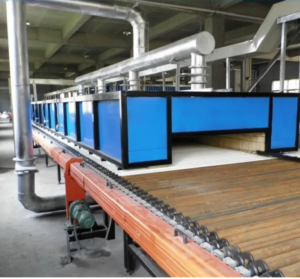
The building materials sector encompasses industrial branches such as cement, glass, and ceramics.
The internal linings of cement kilns typically utilize phosphate-bonded high-alumina, magnesia, or magnesia-chrome unburned bricks, which offer a service life ranging from 6 to 18 months; amorphous refractory materials are also employed in specific localized areas.
In the rotary kilns of a certain large-scale cement plant, refractory castables account for 19% to 35% of the total refractory usage. The primary varieties employed include low-cement refractory castables, aluminate-cement refractory castables, silicon carbide-based refractory castables, and insulating castables.
In the glass industry, the tin baths within float glass production lines are constructed using refractory castables. Furthermore, when glass tank kilns sustain damage, siliceous repair materials are utilized for restoration. During the thermal insulation of newly constructed tank kilns, siliceous insulating castables are typically applied; meanwhile, kilns used in the ceramics industry sometimes incorporate silicon carbide-based refractory castables and lightweight refractory castables.
04. Rolling System
The industrial furnaces within steel rolling systems are diverse in type and numerous in quantity; typically operating at temperatures below 1400°C, they are all flame-fired furnaces.
The furnaces within this system can all be lined with monolithic refractory materials, yielding excellent economic results.
When plastic refractories are used as the lining for steel rolling reheating furnaces, a very long service life is achieved. If the furnace lining is cast monolithically using clay-bonded refractory castables, the service life typically ranges from 4 to 10 years.
For regenerative reheating furnaces, micro-expanding refractory castables should be selected for the lining; in current applications, such linings have remained intact and undamaged after more than two years of service. Steel forging furnaces typically involve intermittent operation, significant temperature fluctuations, and mechanical vibration; while brick linings in such environments last only 2 to 5 months, linings made from clay-bonded refractory castables can endure for over two years.
As is well known, steel rolling reheating furnaces operate at temperatures below 1400°C and function intermittently. Production practices both domestically and abroad have demonstrated that, to achieve a long service life, the lining material should be a refractory castable with an Al₂O₃ content of ≤65%, and with compressive strengths—measured after drying and after firing at 1400°C—of 20–25 MPa and no less than 60 MPa, respectively. This is because refractory castables with higher alumina content and greater strength tend to exhibit poor thermal shock resistance, making them prone to spalling and cracking during operation, thereby compromising their service life.
05. Other Industrial Systems
In the petrochemical industry, tubular heating furnaces utilize lightweight refractory castables with a bulk density of 0.5 to 1.0 g/cm³. These materials are installed using methods such as manual troweling or spraying, and typically have a service life of approximately five years.
The construction of furnace linings using sprayed refractory materials has also yielded excellent operational results. In particular, abrasion-resistant refractory castables have been successfully implemented in platinum reforming units; this application allows for the elimination of the heat-resistant steel hex-mesh anchoring system while simultaneously extending the service life of the lining.
Linings for various types of conversion furnaces—which operate within a temperature range of 600°C to 1500°C—typically employ aluminate-cement-bonded refractory castables, low-cement refractory castables, or corundum-based castables, offering a service life of three to six years.
In the non-ferrous metallurgy industry, amorphous refractory linings are utilized in specific sections of thermal equipment such as enclosed lead-zinc blast furnaces, flash smelting furnaces, electrolytic cells, and rolling reheating furnaces.
Recently, anti-permeation refractory castables have been widely adopted in aluminum electrolytic cells, yielding highly satisfactory operational results. In the context of steam boiler linings, the application of amorphous refractory materials is both the earliest and most widespread practice; these linings typically consist of heavy-duty or lightweight aluminate-cement-bonded refractory castables and offer a service life of approximately ten years.
Fluidized-bed power generation boilers utilize high-alumina, corundum-based, and silicon carbide (SiC) refractory castables and plastic refractories; these materials possess high mechanical strength and excellent abrasion resistance, thereby fully meeting the stringent requirements for both design and operation. Furthermore, amorphous refractory materials are also employed—with excellent results—across various other industries, including mechanical manufacturing, refractory production, and waste incineration.