
1. Definition of Refractory Materials
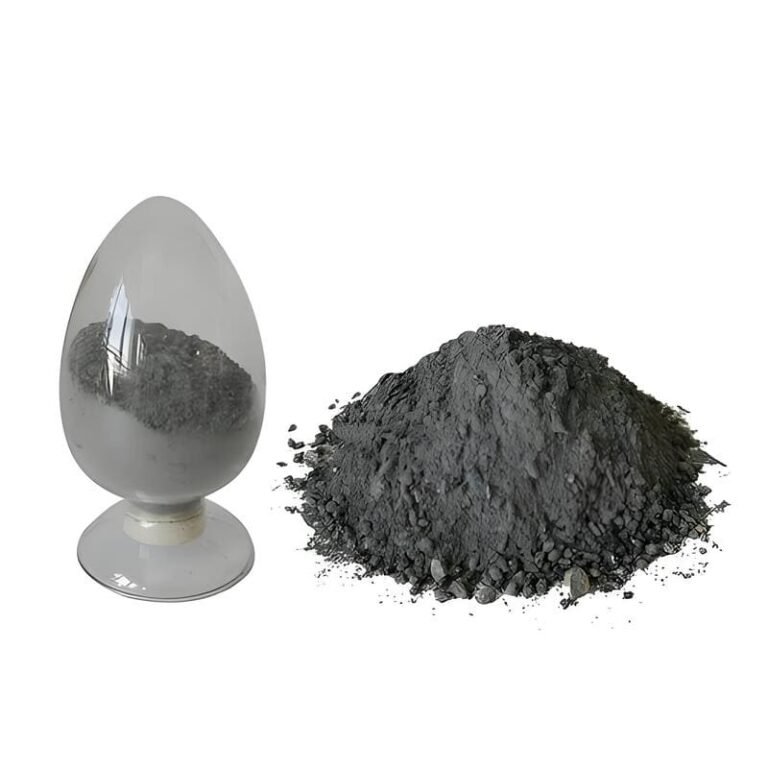
Refractory materials generally refer to a class of inorganic non-metallic materials with a refractoriness of not less than 1580℃. However, with the rapid development of the refractory materials industry, defining refractory materials solely by refractoriness is no longer accurate. Currently, any material whose physicochemical properties allow it to be used in high-temperature environments is called a refractory material.
2. Applications of Refractory Materials
Refractory materials are widely used in high-temperature industrial fields such as metallurgical kilns (including ferrous and non-ferrous metallurgy), building materials kilns (including glass, cement, ceramics, and other inorganic non-metallic products), chemical industrial kilns (including petrochemicals and other chemicals), electrolytic furnaces, various industrial electric furnaces, thermal power boilers, waste incinerators, other industrial boilers, and other thermal kilns. They are essential basic materials for ensuring the production operation and technological development of these industries, playing an irreplaceable and vital role in the development of high-temperature industrial production. The metallurgical industry has the largest consumption of refractory materials, accounting for 50% to 60% of total output.
3. Performance of Refractory Materials The performance indicators of refractory materials include structural properties, thermal properties, mechanical properties, service performance, and operational performance.
Structural properties of refractory materials include porosity, bulk density, water absorption, air permeability, and pore size distribution. These indicators can evaluate the quality of the refractory material and the quality of the manufacturing process.
Thermal properties of refractory materials include thermal conductivity, coefficient of thermal expansion, specific heat, heat capacity, thermal conductivity coefficient, and thermal emissivity. These indicators directly affect the material’s heat conduction and thermal stability.
Mechanical properties of refractory materials include compressive strength, tensile strength, flexural strength, torsional strength, shear strength, impact strength, abrasion resistance, creep resistance, bond strength, and modulus of elasticity. These indicators reflect the material’s shape behavior under various external stresses.
Service performance of refractory materials includes refractoriness, softening temperature under load, reheat linear change, thermal shock resistance, slag resistance, acid resistance, alkali resistance, hydration resistance, CO erosion resistance, electrical conductivity, and oxidation resistance. These indicators determine the service life and stability of materials under specific environments. The operational properties of refractory materials include viscosity, slump, flowability, plasticity, and adhesion; these indicators affect the processability and construction difficulty of the material.
4. Classification of Refractory Materials Refractory materials are diverse in type and application. Scientific classification of refractory materials facilitates scientific research, rational selection, and management. There are many methods for classifying refractory materials, including classification based on chemical properties, chemical mineral composition, production process, and material morphology.
Refractory materials can be classified according to their refractoriness as follows: Ordinary refractory materials: 1580℃~1770℃; High-grade refractory materials: 1770℃~2000℃; Extra-grade refractory materials: >2000℃.
Based on their chemical properties, refractory materials can be classified as follows: Acidic refractory materials; Neutral refractory materials; Basic refractory materials.
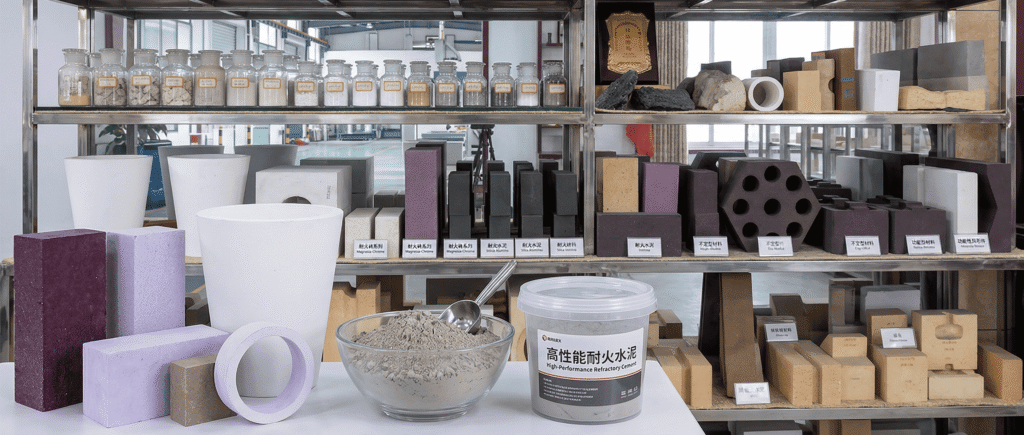
Based on their chemical and mineral composition, refractory materials can be classified as follows: Silica refractory materials; Aluminosilicate refractory materials; Corundum refractory materials; Magnesia refractory materials; Magnesia-calcium refractory materials; Alumina-magnesia refractory materials; Magnesia-silica refractory materials; Carbon composite refractory materials; Zirconium refractory materials; Special refractory materials. Mineral composition classification directly characterizes the basic composition and properties of various refractory materials and is a common classification method in production, use, and research, possessing strong practical application significance.
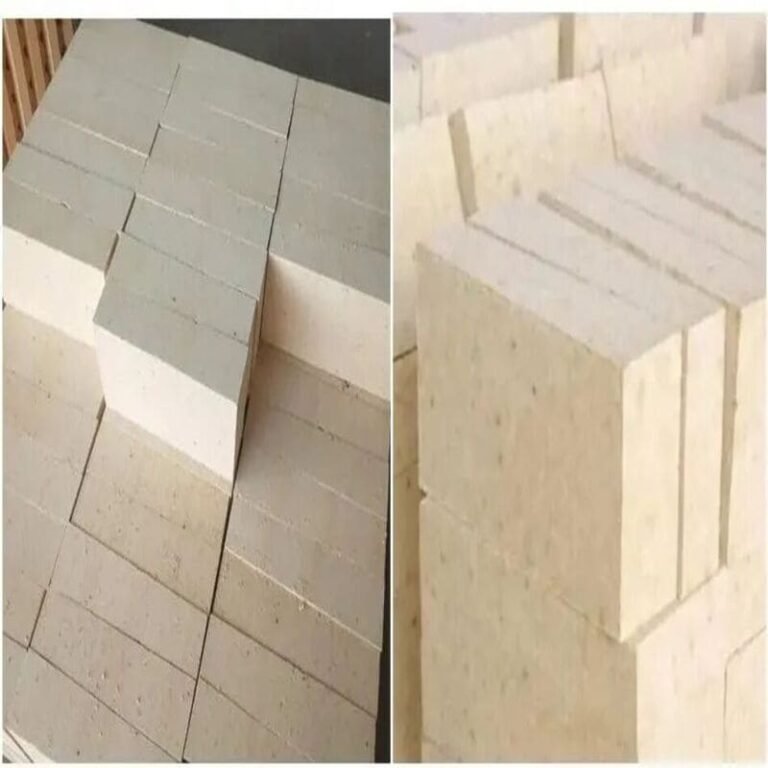
According to the manufacturing method, refractories can be divided into: fired products, unfired products, cast-molded products, and unshaped refractories. Unshaped refractories can be further subdivided according to construction methods into castables, sprayables, ramming mixes, plastics, pressure castables, projection mixes, coating mixes, dry vibratory mixes, self-flowing castables, and refractory mortars, etc.
According to the shape and size of the products, they can be divided into: Standard type: 230mm × 114mm × 65mm; Irregular type:
No more than two concave corners or one acute angle of 50-70°; Dimension ratio Max:Min < 6:1; Special type:
No more than four concave corners or one acute angle of 30-50°; Dimension ratio Max:Min < 8:1; Special products: Crucibles, vessels, tubes, etc.